The Silver Bell
Le Timbre d’ argent
CAMILLE SAINT-SAËNS
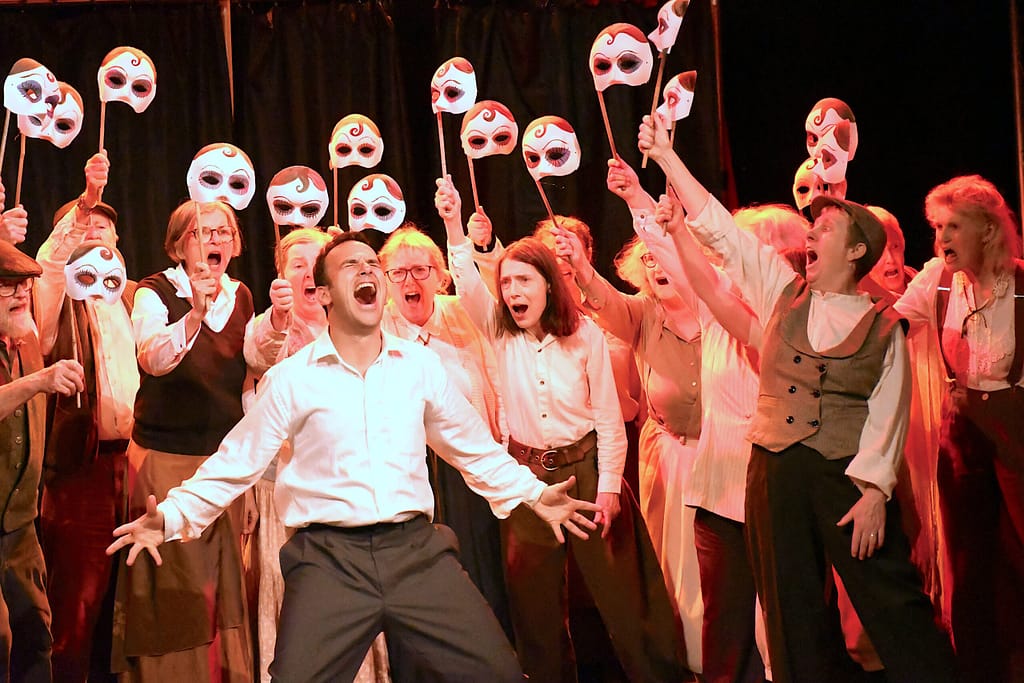
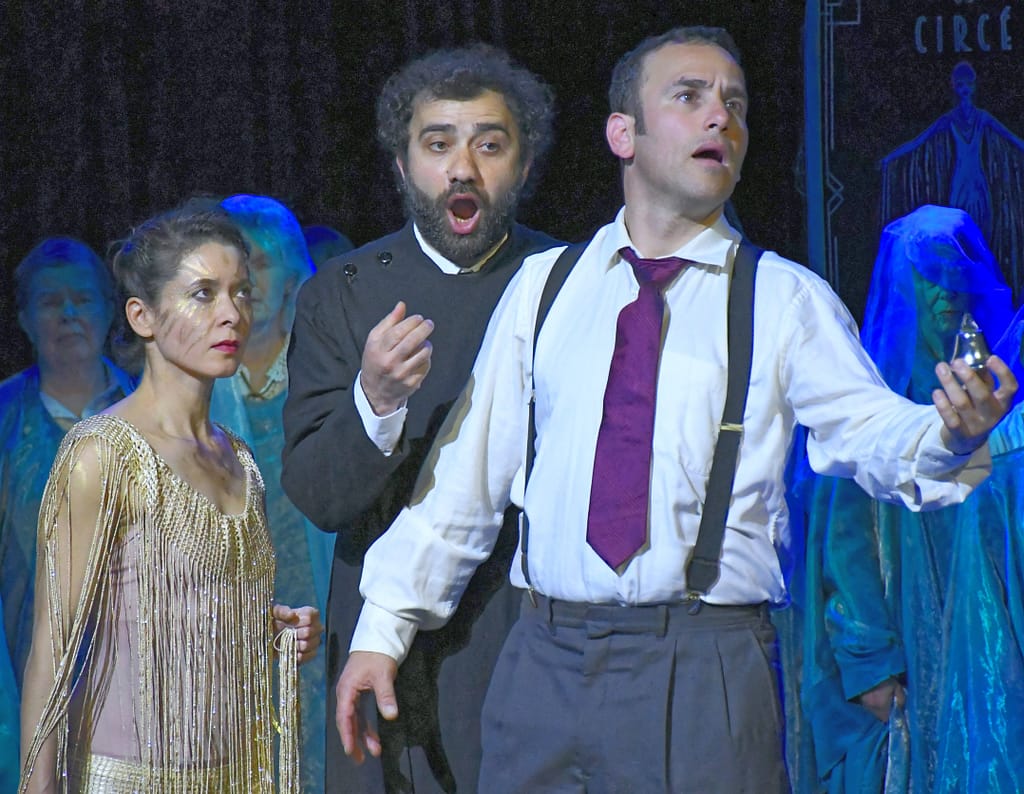
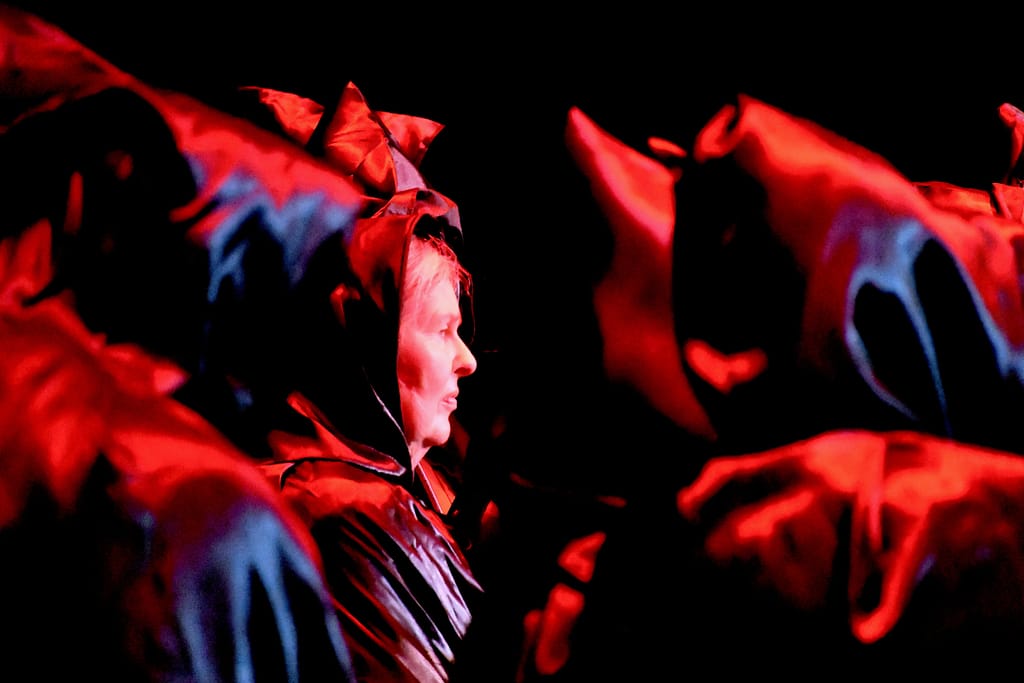
“Over its 46 years of existence, New Sussex Opera has shown considerable enterprise in seeking out and performing rare, worthwhile operas. Their latest rediscovery is The Silver Bell Le Timbre d’argent, in a neat English translation by Paul Featherstone. Given bags of atmosphere by Mollie Cheek’s designs, as well as James Harvey’s striking lighting, Paul Higgins’ production brings together all the diverse elements of the plot with optimum clarity.
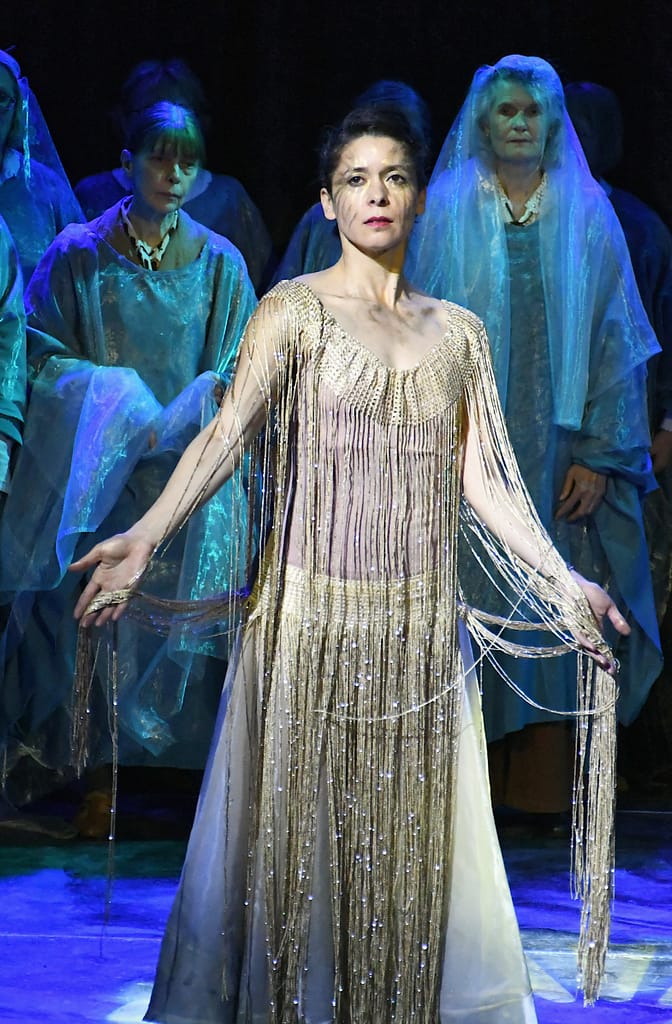
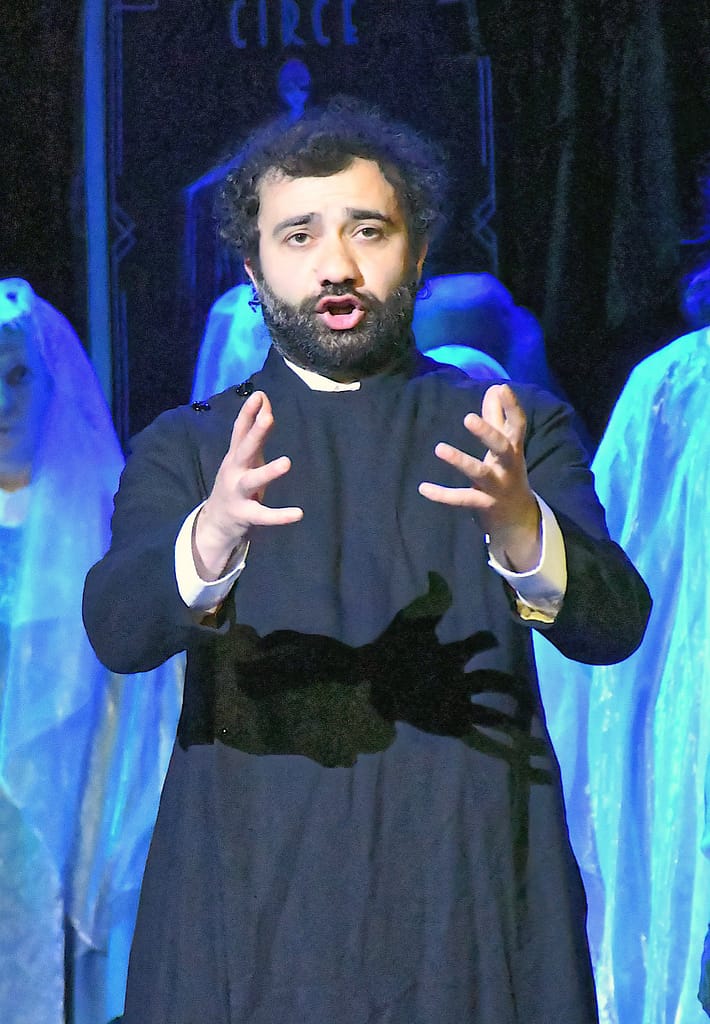
As Conrad, Anthony Flaum’s outstanding stage savoir faire is unimpaired: Arshak Kuzikyan draws on the darker colours of his powerful baritone to summon up the demonic Dr Spiridion, while Sky Ingram’s bright soprano creates the exact vocal persona for the much-loved Hélène. Lucy Farrimond’s Rosa, Harun Tekin’s Bénédict and Hope Heaven’s Patrick all leave a positive mark. In the entirely danced roles of Circé and Fiametta and precisely matching the varied moods of Saint-Saëns’ score, Namiko Gahier-Ogawa treads the steps of her own choreography perfectly.
Working with the flexible St Paul’s Sinfonia, conductor Toby Purser demonstrates considerable sensitivity to the score’s many musical subtleties. The chorus, meanwhile, works its collective socks off.”
George Hall – The Stage
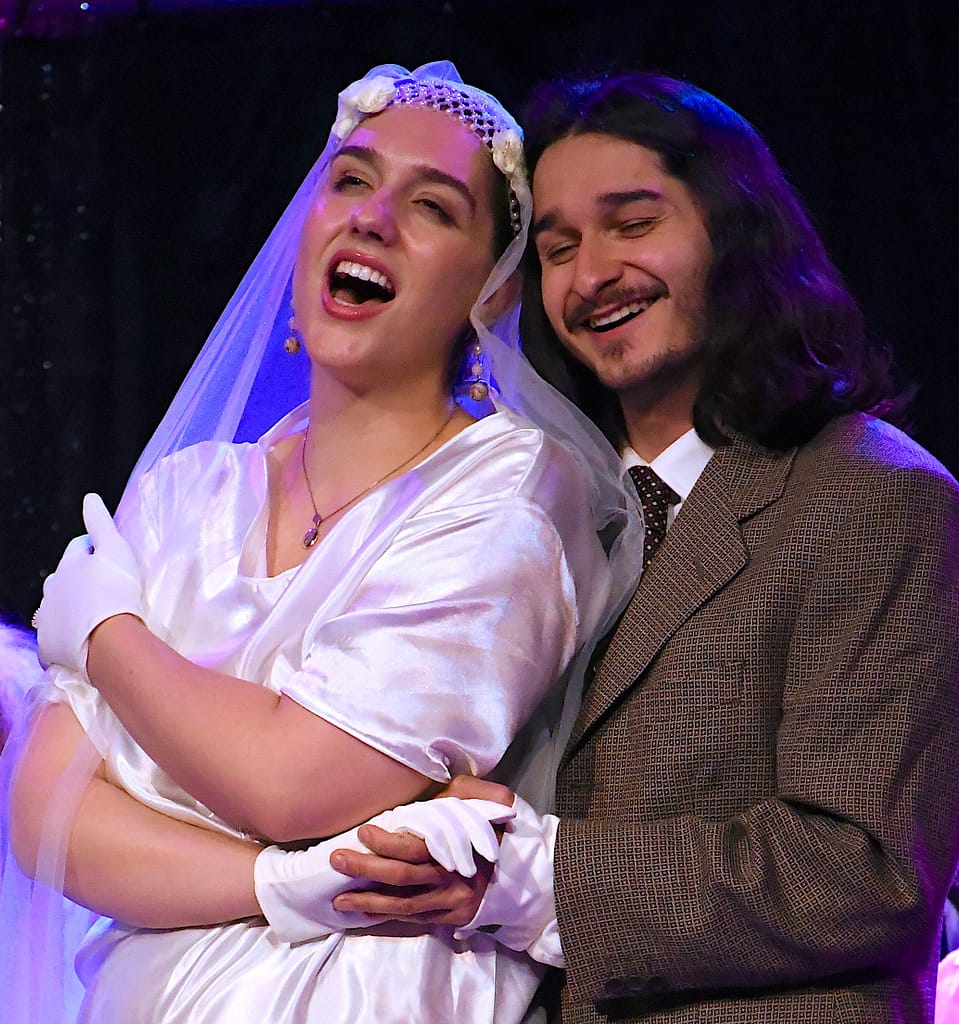
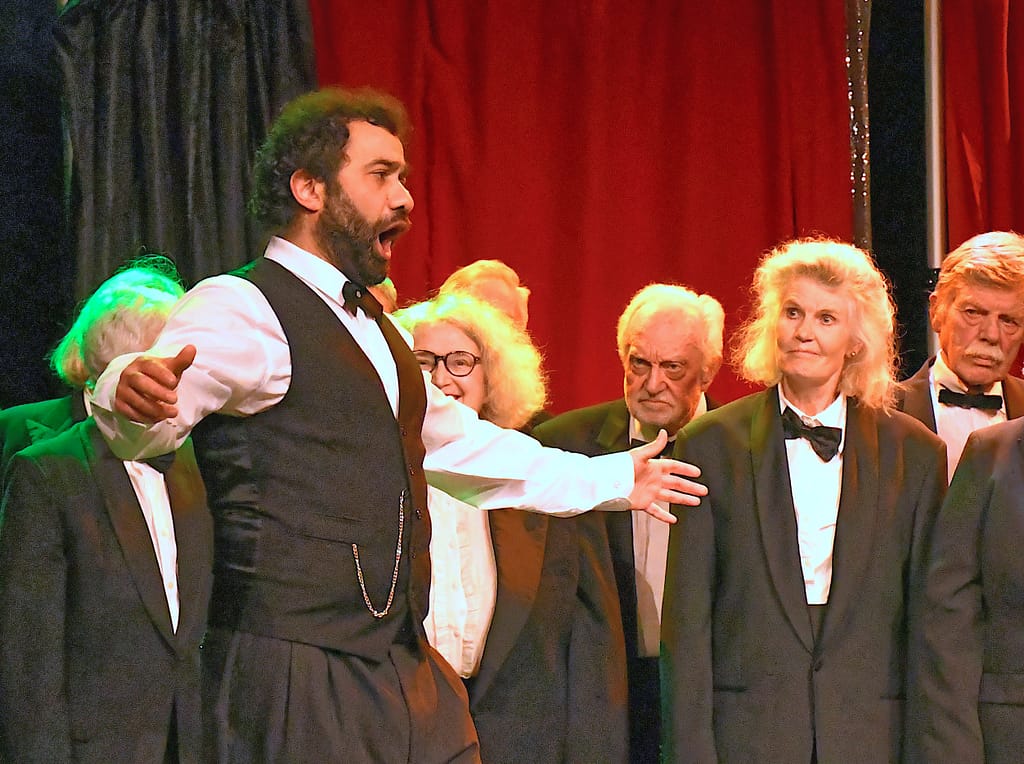
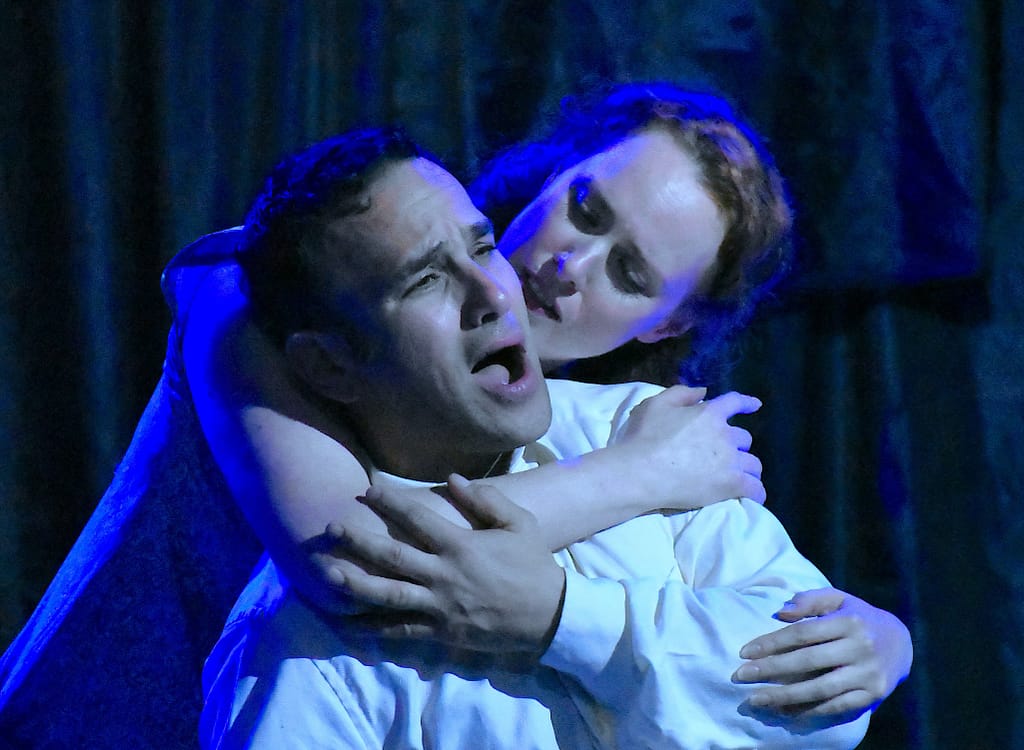
An enthusiastic cast brings the work to life with, often, a cheery vigour, especially from the NSO Chorus. Anthony Flaum evinces commendable vocal control even as Conrad increasingly loses his mind to unobtainable desire. By contrast, Arshak Kuzikyan offers a steady, lithe gravitas in the ambiguous role of Spiridion, skilfully navigating the different personas he adopts. There are crisp, carefree performances of Conrad’s friend Bénédict (later to fall victim to Conrad’s covetousness) and fiancée Rosa by Harun Tekin and Lucy Farrimond, while Sky Ingram gives a more urgent account of Rosa’s sister, Hélène, who harbours her own, calmer love for Conrad.
Toby Purser brings a light touch with St Paul’s Sinfonia in Saint-Saens’s never less than competent score, yielding nothing in liveliness and spontaneity, particularly during the two sequences which accompany Fiametta’s dancing where the dramatic action otherwise comes to a halt. (The dance interludes would hold their own as independent items in the concert hall.) – Curtis Rogers / Classical Source
In a world where the future and validity of opera is frequently still being questioned and debated; where the buzzword is “innovation,” where directors and producers are striving to shock for effect, to provoke, to grab attention; where it is still being contorted and turned topsy-turvy by the movers and shakers in the big houses, it’s so refreshing and delightfully heartening to learn that some smaller enterprises are striving to maintain the true ethos and beauty of the art. Mike Hardy / OperaWire
“Even with a limited budget the result showed visual flair in Mollie Cheek’s designs (some outstanding costumes, speedily doffed and donned in lightning quick changes by the chorus) and James Harvey’s lighting (precisely apt to every mood called tor). Paul Higgins’s clear-eyed staging took the Viennese background as a cue for a visual focus on such later phenomena as Freudian psychoanalysis and the German cinema of the 1920s. Singing the steadily crumbling Conrad was Anthony Flaum who revealed exactly what this long, hefty role is about. His stagecraft, as always, proved faultless. Arshak Kuzikyan’s potent baritone gave the demonic Spiridion presence to spare. The role of Conrad’s doomed friend Bénédict was perfectly realised by the tenor Harun Tekin, and Lucy Farrimond brought charm and personality to Bénédict’s fiancée, Rosa. Sky Ingram’s light, bright soprano offered the ideal colouristic range for Rosa’s sister, Hélène. Hope Heaven made her mark as Patrick.
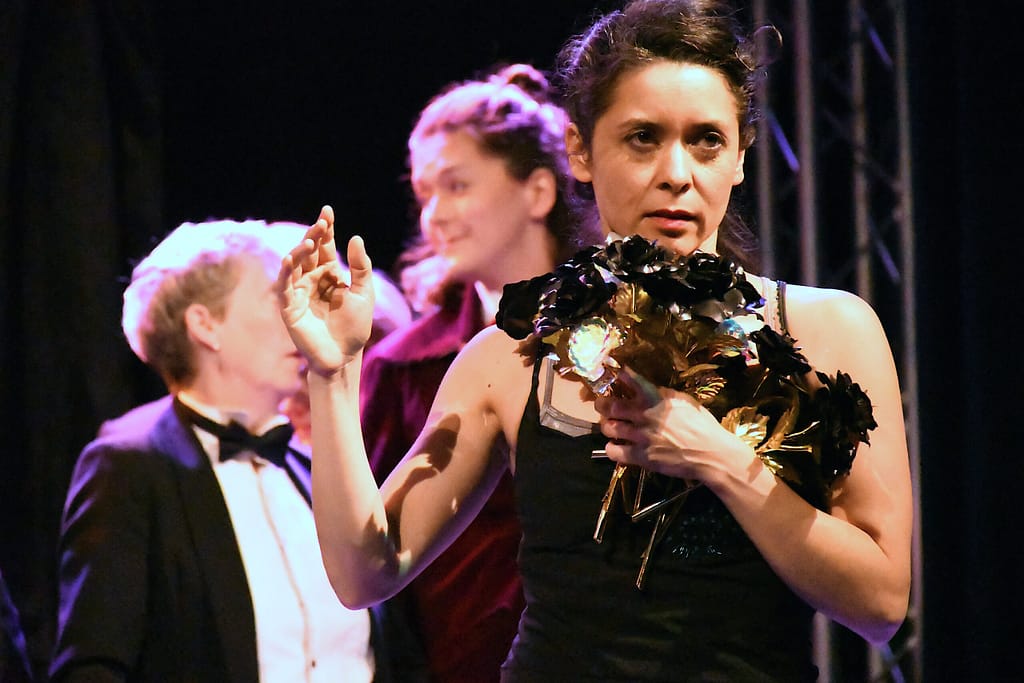
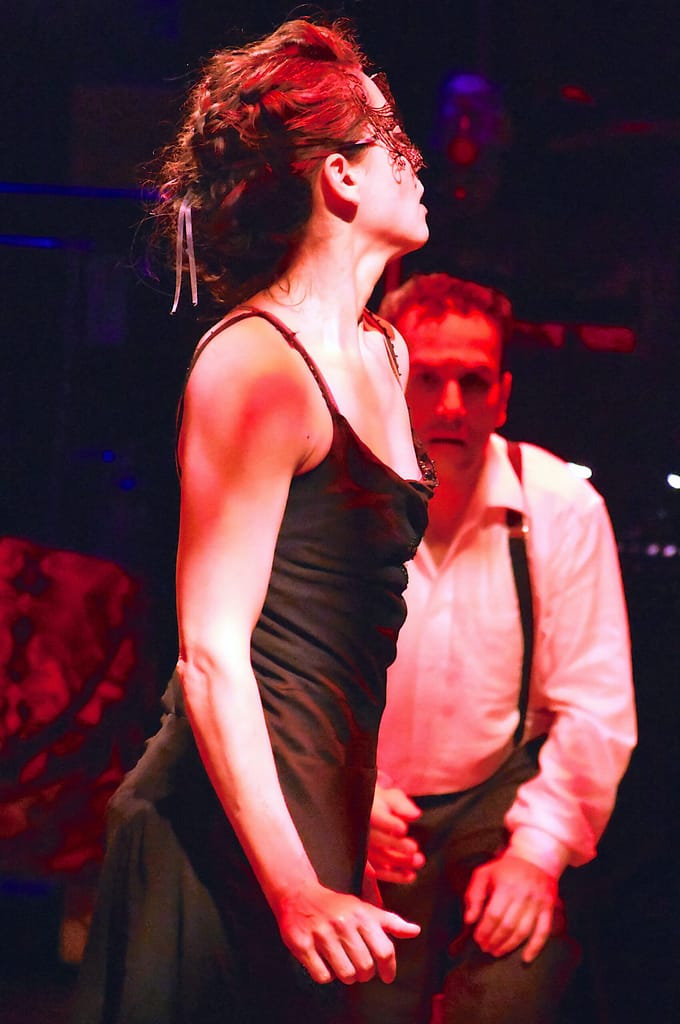
Particularly memorable was Namiko Gahier-Ogawa’s choreography, much of it conceived for herself in the dual non-singing roles of Circé and Fiametta; it fitted the shifting moods of Saint-Saëns’s score to a T. The NSO chorus worked hard and with success: so too the players of the St Paul’s Sinfonia, performing a canny orchestral reduction by the ensemble’s leader, James Widden. Toby Purser conducted with an impressive sense of style.” – Opera
Much of the atmosphere of this NSO production is helped by Mollie Cheek’s sombre and effective designs, James Harvey’s ambient lighting and Namiko Gahier-Ogawa’s alluring choreography as Fiametta. Leading the cast is tenor Anthony Flaum, resounding of voice and suitably agitated in his attempts to control his paranoia and remorseful when unable to commit to the blameless Hélène whose unconditional love for him is apparent from Sky Imgram’s fulsome and, at times, Wagnerian soprano. Hélène’s sister Rosa is taken by Lucy Farrimond who makes the most of her appealing duets, the second on the day of her wedding to the unfortunate Bénédict (a clear-voiced Harun Tekin with the best diction in the house) who falls victim to Conrad’s greed. Taking on multiple roles is Armenian baritone Arshak Kuzikyan as the insidious, but comic Spiridion whose darker tones variously beguile and insinuate themselves over his hapless patient.
The hard-working chorus bring a vigorous commitment to The Silver Bell and, in the pit, the St Paul’s Sinfonia, under the assured guidance of Toby Purser, illuminates this imaginatively scored work (here reduced to chamber proportions) with some fine instrumental cameos. Thanks to the enterprise of New Sussex Opera, this thoroughly worthwhile work will have reached new audiences, affirming the developing skills of Saint-Saëns and the already established reputation of this impressive company. – David Trulove / Opera Today
“It is a really charming and rather affecting opera that the composer lavished all his talent on, a varied feast of music, full of cute orchestrations, that almost sounds more German (Weber, Nikolai, that sort of thing) than French. It’s not dull for a second, helped by Anthony Flaum’s total conviction in the main role… Really good playing from St Paul’s Sinfonia under Toby Purser… Pick of the singers was Harun Tekin, who also gets the best music (that’s the kind of weirdness the composer delivers) – elegant and nicely shaped songs. Namiko Gahier-Ogawa was rather sensational as the dancer Circé, Paul Higgins directed with admirable clarity and NSO’s stalwart and ageless chorus went the extra mile.” Robert Thicknesse / Opera Now
Lyrical drama in four acts
UK Première
Libretto: Jules Barbier & Michel Carré
English translation by Paul Featherstone
May / June 2025
All Saints Centre, Lewes
Blackheath Halls
Devonshire Park Theatre, Eastbourne
Pavilion Theatre, Worthing
Theatre Royal, Winchester
Photographs – Colin Chapman
Conrad – Anthony Flaum
Hélène – Sky Ingram
Spiridion – Arshak Kuzikyan
Rosa – Lucy Farrimond
Bénédict – Harun Tekin
Patrick – Hope Heaven
Circé / Fiametta – Namiko Gahier-Ogawa
New Sussex Opera Chorus
St Paul’s Sinfonia
Conductor – Toby Purser
Chorus Master – Leif Tse
Director – Paul Higgins
Designer – Mollie Cheek
Lighting Designer – James Harvey
Choreographer/ Assistant Director
– Namiko Gahier-Ogawa
Dramaturg – Ben Poore